Methane Ascent Fuel
A Mars expedition cannot haul its return rocket fuel across the solar system without ballooning initial launch masses to astronomical scales. Synthesizing dense cryogenic liquid methane (LCH4) and liquid oxygen (LOX) on Mars unlocks the closed-loop return pathway.
The Sabatier Reactor Architecture
First discovered by French chemist Paul Sabatier in 1897, the Sabatier methanation reaction combines hydrogen gas and carbon dioxide at 350°C to 450°C over a ruthenium or nickel catalyst bed:
This reaction is strongly exothermic, meaning once initiated, it generates its own heat. The output consists of clean methane fuel and liquid water. The byproduct water is cycled into an electrolysis unit to regenerate hydrogen while generating essential oxygen:
Propellant Mass Leverage & Mass Ratios
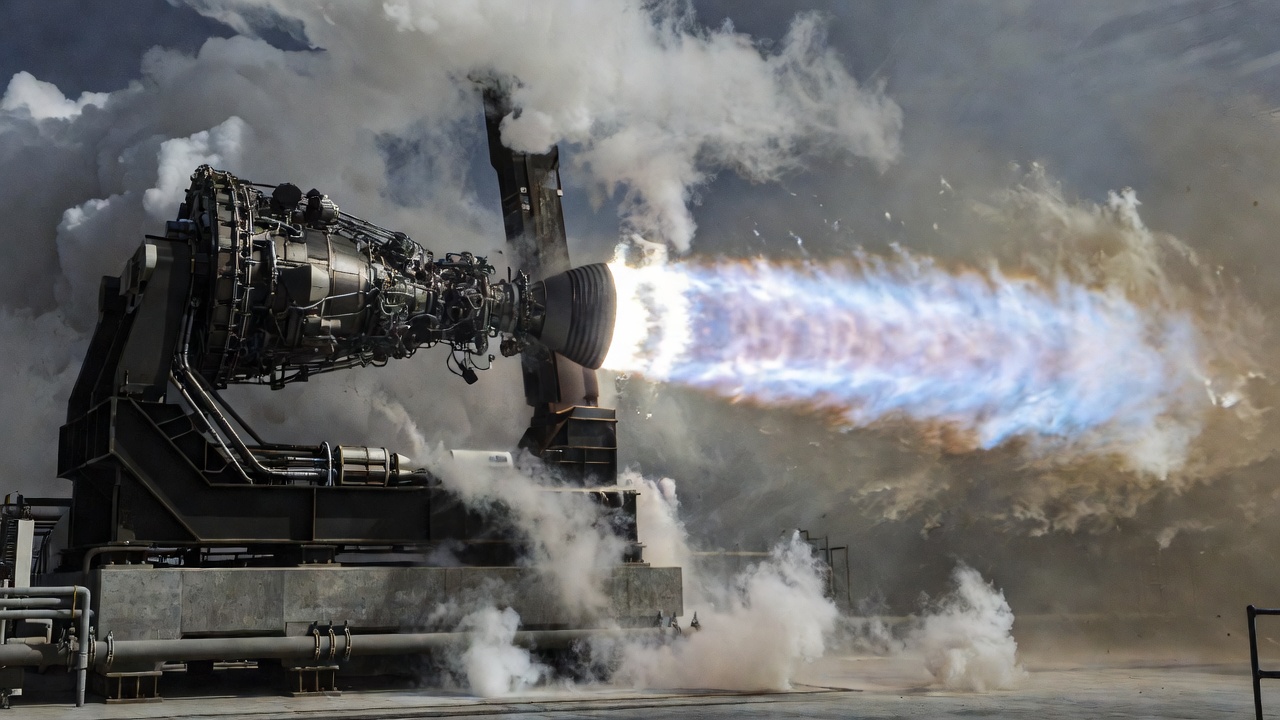
Modern stainless steel orbital starships employ staged combustion engines optimized for an oxidizer-to-fuel (O/F) mass ratio of approximately 3.6 to 3.8. The basic Sabatier loop alone yields an O/F ratio of 2:1, resulting in a surplus of methane or an oxygen deficit.
To balance this stoichiometric discrepancy without venting unburned methane, engineers integrate supplemental Solid Oxide Electrolysis (MOXIE) to supply the extra liquid oxygen, creating the exact 3.8:1 balance required by high-chamber-pressure rocket engines.
| Element | Mass per Ascent Stage | Source On Mars |
|---|---|---|
| Liquid Methane (LCH4) | 30,000 kg | Sabatier Reactor (CO2 + Water Ice) |
| Liquid Oxygen (LOX) | 114,000 kg | Water Electrolysis + SOEC MOXIE |
| Energy Consumption | ~1.2 MWh / tonne propellant | Dedicated 100 kWe Nuclear Core Array |
| Cryo Liquefaction Loss | < 0.05% / month | Active Pulse Tube Cryocoolers at 90 K |
Cryogenic Liquefaction and Storage in Martian Partial Vacuum
Methane liquefies at 111.6 K (-161.5°C), while oxygen liquefies at 90.2 K (-183°C). Storing hundreds of tons of cryogens on the Martian surface over a 500-day stay presents distinct challenges:
- Boil-off mitigation: Double-walled vacuum-jacketed tanks coated with multi-layer insulation (MLI) gold film reflect radiation.
- Dust accumulation: Fine electrostatic dust coating exterior cooling radiators reduces thermal re-radiation into deep space by up to 40% if not cleared mechanically with electrostatic repulsion sweeps.
- Zero-Boil-Off (ZBO): Active Stirling cycle cryo-refrigeration units re-compress and re-condense boiled vapors, ensuring tank mass remains 100% stable until launch day.